Industrial manufacturing relies heavily on rotary screw air compressors as a primary utility (often referred to as the “fourth utility” alongside electricity, water, and gas). They are engineered for continuous, heavy-duty operation (100% duty cycle), providing steady airflow to power tools, machinery, and production line processes.
Key Types Used in Manufacturing
-
Oil-Injected Screw Compressors
-
How it works: Oil seals the rotors, cools the air during compression, and lubricates moving parts. An internal separator filters out the oil before the air is delivered to the system.
-
Common Applications: General manufacturing, metal fabrication, automotive assembly, plastics, and heavy machinery.
-
Key Advantage: Highly durable, cost-effective, and long operational lifespan.
-
Oil-Free Screw Compressors
-
How it works: Uses dry-running rotors or water injection for cooling, ensuring zero oil contact with the compressed air stream.
-
Common Applications: Pharmaceuticals, food & beverage, electronics/semiconductors, precision optics, and chemical processing.
-
Key Advantage: Ensures compliance with strict air purity standards (ISO 8573-1 Class 0) to prevent product contamination.
Core Compression Technologies
Typical Applications in Plants
-
Pneumatic Actuation & Robotics: Operating cylinders, valves, clamping mechanisms, and automated robotic arms.
-
Laser & Plasma Cutting: Supplying high-pressure auxiliary gas (e.g., 16–20 bar) for clean edge cutting.
-
Material Handling & Conveying: Moving powders, granules, and small components through pneumatic tubes or blowers.
-
Surface Treatment & Painting: Powering spray paint booths, sandblasting, and surface coating processes.
Essential Downstream Equipment
Raw compressed air contains moisture, oil vapors, and particulates. A complete compressed air system typically includes:
-
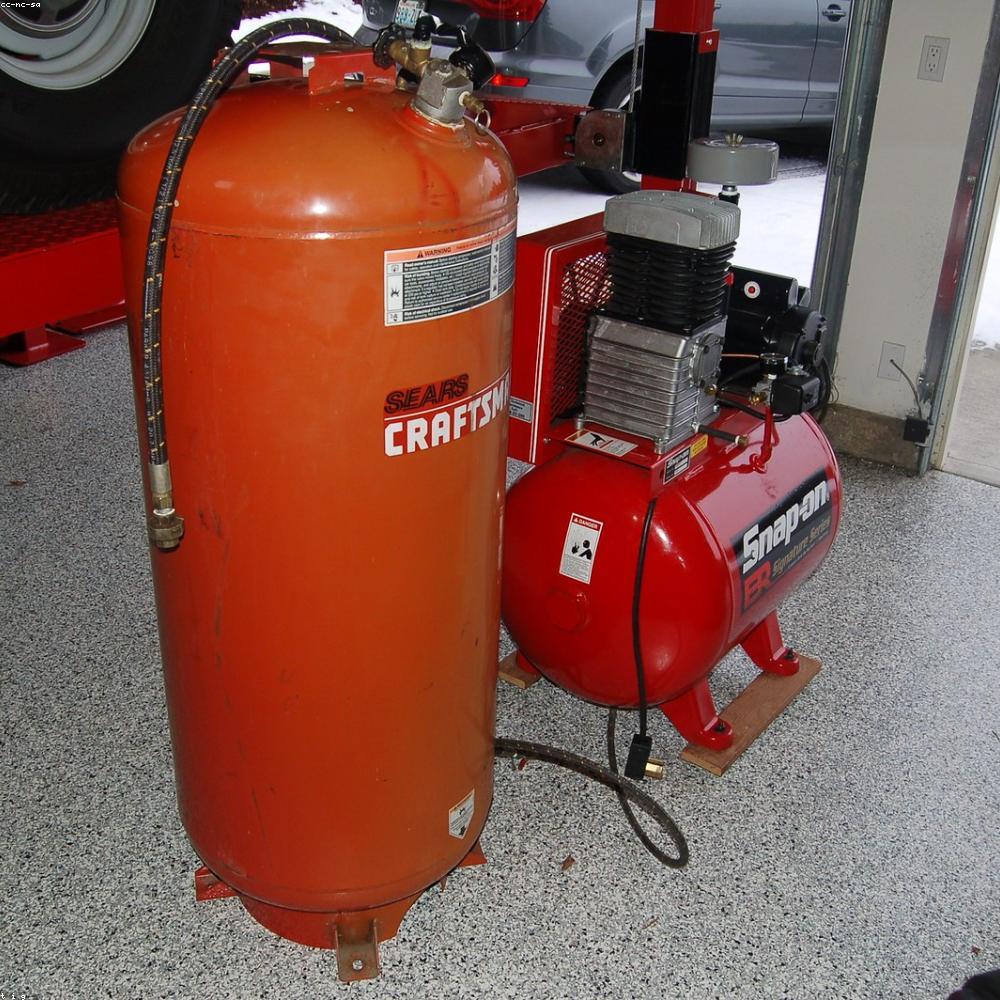
Air Receiver Tank: Stores compressed air to buffer pulse demand and reduce cycling.
-
Air Dryer (Refrigerated or Desiccant): Removes water vapor to prevent pipe corrosion and equipment failure.
-
In-Line Filtration (Coalescing & Dust Filters): Traps oil aerosol, micro-particles, and dust down to sub-micron levels.
-
Oil-Water Separator: Cleans condensate drainage before disposal to meet environmental regulations.
Selection Checklist for Manufacturing
When sizing or upgrading a plant compressor, consider:
-
Flow Rate (CFM or $\text{m}^3/\text{min}$): Total air volume required by all active equipment plus safety margins.
-
Pressure (PSI or Bar): The highest minimum operating pressure required by any single machine on the line.
-
Duty Profile: Whether air usage is constant (Fixed Speed) or variable (VSD / Two-stage PM VSD).
-
Air Purity Class: Need for Class 0 oil-free air vs. standard filtered air.